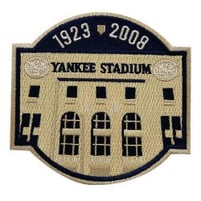
By early Monday morning, the famous DiMaggio sign from the tunnel leading to the Yankees’ dugout was missing. Derek Jeter, prime suspect, was not talking.
“Everybody wants to know,” he said with a crooked, sheepish smile when asked if Joe D’s famous expression of pinstriped devotion — “I want to thank the Good Lord for making me a Yankee” — was the keepsake he claimed to have his eye on before the Yankee Stadium finale.
“In due time,” Jeter said.
He was finally back at his dressing stall after a long night’s demonstration of why he could have gotten away with carting out the infield if he could have figured out how to lift it from the ground.
When they handed him a microphone on the field late Sunday night and his teammates crowded ’round, his words of gratitude to the fans were heartfelt, delivered with a poised candidate’s deliberate cadence. He said he was nervous but he seemed as if he were born for the moment, and with an occasional dab of the eye, we could believe he was the luckiest man on the face of the earth.
“What I was thinking as Derek was speaking was that it was going to be one of those moments that will play over and over for the next 100 years, like Lou Gehrig,” General Manager Brian Cashman said, standing near home plate while all around him, grown Yankees multimillionaires bent over and scooped dirt into small plastic cups.
“I was thinking exactly that for him, how it doesn’t happen very often that an individual Yankee gets to address the entire Stadium on an occasion this special,” Cashman said. “And no doubt it had to be Derek.”
•
It had to be the player for whom the flashbulbs popped as they did for no other during each at-bat, all five hitless, in the 7-3 victory wrap of the Orioles. Jeter was still the people’s choice, as he has long been in the South Bronx, and will remain across the street next year.
He is the quiet captain, aloof even, some have argued, but everything he said Sunday night was pitched perfectly, and not just on the field. Before the game, he was asked what made Yankee Stadium so different. The lights, for one thing, he said. They always seemed brighter than elsewhere. He said he imagined actors feeling likewise playing Broadway.
“To be out there with him tonight as he spoke to the fans, as he let them know what the Stadium means to him, is something I’ll never forget,” the rookie outfielder Brett Gardner said. “You know, a lot of people say he’s a quiet captain. and maybe he is, but he’s a guy that leads by example, and that’s the kind of guy I want to follow.”
Jeter said the collective lap around the field “just kind of happened” but there was a moment when his arms were extended in the direction he wanted the Yankees to go. It was no one-man show: Mariano Rivera, Andy Pettitte and Jorge Posada remain beloved holdovers from the championship Joe Torre era, but the gesture was clearly a Jeter orchestration.
You could say that the Orioles owed it to the Yankees to play the inconspicuous role of the opponent in the staged production of self-celebration. On the night in Baltimore in September 1995 when Cal Ripken Jr. broke Gehrig’s record for the most consecutive games played, DiMaggio, of all people, graced the occasion with a rare ballpark visit. It may seem strange to younger fans after the home-run onslaught and subsequent steroid revelations, but a player merely running out to take his position at shortstop meant that much only 13 years ago.
•
“You could, after four and a half innings, watch him lap the field, grabbing hands all the way around, pulling America back into baseball,” I wrote of Ripken that night, sitting in the left field auxiliary press section.
In the season after a bitter work stoppage killed the World Series, Ripken reminded the country of the sport’s most appealing aspect, its men-at-work ethos. It always annoyed me to no end when people would say that McGwire and Sosa saved the game. The reality is that baseball came to a fork in the road, chose what it thought was a shortcut to riches and nearly wound up in ruin.
The season after Ripken left Gehrig behind, Jeter became a Yankee Stadium fixture at shortstop and a reminder over the past 13 years that the game is best measured by little things more than the long ball. By timely base hits and body language and grace under pressure.
“Derek is a lot like Cal because he represents all that our society aspires to be and what our game should aspire to be,” Cashman said. “Like Cal, and like most Americans, he takes his job seriously. He goes to work every day, and he does it with pride for his franchise and his city.”
After all these years, punctuated recently by Jeter’s surpassing of
Gehrig, too, as Yankee Stadium’s career hits leader before they turned out
its bright lights, there is nothing quiet about a statement like that.
E-mail: hjaraton@nytimes.com
Degradation of the athlete happens in real time now. There are no more deadlines in the always-on world, only the next tweet, the next blog, the next posting, the next camera phone shot coming off the non-stop conveyor belt of the Criticism Factory that runs around the clock. It used to be that athletes could remain iconic because they remained unknown enough. We filled in the vast blank expanses between the highlights and the occasional press conferences with happy characteristics of our choosing, including the most inappropriate of sports clichés, "heroic." Now, for many, we know too much. LeBron James is only the latest athlete whose reputation -- or as it wrongly is called in the sports' media version of speed chess, "legacy" -- has been sunk by TMI. The Information Age has chewed up and spit out athletes who might have remained false sporting gods in another age: James, Barry Bonds, Roger Clemens, Brett Favre, Michael Vick, Alex Rodriguez, Ben Roethlisberger, Kobe Bryant, Mark McGwire, Tiger Woods, Michael Phelps, Lance Armstrong, et al. CORCORAN: Jeter's 3,000 by the numbers Against this huge cultural shift, Derek Jeter has collected more hits than any of the great icons that ever played for the most famous and most studied franchises in sports, the New York Yankees, and done it with charm and grace that hardly seems possible any more. Reaching 3,000 hits, as Jeter did Saturday with a third-inning home run against the Rays' David Price, is in itself an enormous athletic achievement, one that despite great leaps in training, equipment, nutrition and, yes, pharmacological assistance, remains as impressive as when baseball was played with dead balls by out-of-shape men who worked odds jobs in offseasons. From 1989 through 1994, just as ballparks were getting smaller, leagues were expanding and steroids were growing, 990 players debuted in the major leagues -- none of whom could parlay this enhanced hitter's age into 3,000 hits. That six-year gap without the start of a 3,000-hit career is the longest such gap since 1947, when Jackie Robinson integrated the game. And then Jeter came along. He arrived with that awkward inside-out swing, a high-elbows running style that appeared to be a succession of hinges, and a dancer's body that never succumbed to the preposterous musculature of his generation. That nothing much changed about Jeter all these years, in style and comportment, is an achievement worth celebrating as much as 3,000 hits. Think about the arc of his career in terms of how we treat our sports stars and you begin to understand this achievement better. Jeter was drafted in 1992, five years after the birth of local all-sports radio and two years before ESPN radio started taking calls from listeners. Jeter played his first major league game in 1995, the year after the web browser was introduced. He made his first All-Star Game in 1998, the year Google was founded. He hit a career-high .349 in 1999, the year the commercial camera phone was introduced. He reached 2,000 career hits in 2006, the first season after TMZ began. He has made it to 3,000 hits with satellite imagery available on your cell phone of his 31,000-square foot home. Jeter is steadfast in revealing little about himself personally, steering clear of the look-at-me narcissism of athletes such as James. He also is fierce about filtering negativity from his life, instructing his family and friends not to bring negative media coverage to his attention, a policy challenged in the past two years by his down season last year, the acrimonious contract negotiations with the Yankees, and a season of further erosion this year. "Difficult? Yeah, it can be difficult," Jeter said about his insulation from negativity. "I hear about it, but you take the good with the bad. I'm not going to sit and complain." That his decline phase is playing out in such an open environment of information consumption unfairly detracts from his career. If anything, Jeter is underrated as an all-time great. His career at shortstop is one of the five greatest ever at the position, a position that arguably is the most important everyday job in baseball. No other shortstop has more hits while playing the position or has played more games there for one team than Jeter. Among the five shortstops who have played the most games at the position overall -- Omar Vizquel, Luis Aparicio, Ozzie Smith, Jeter and Cal Ripken Jr. -- Jeter has the highest OPS and the most championship rings. He is to the position what Bill Russell is to center in the NBA -- not defined as the greatest talent but as a championship fixture. That Jeter is known as a "clutch" player -- "Captain Clutch," in the Marvel Comics style of sports coverage -- is a vanity born from enough postseason narratives. He arrived just as baseball expanded its playoff format and did so with a team just emerging from a fallow period. His timing was impeccable -- he has played in 30 postseason series that include 147 games, the vast majority of which, because of the Yankees' popularity, has played out on prime-time national television and the arrival of high-definition broadcasts. Joe DiMaggio, for instance, somewhat regarded as the Yankee progenitor to the Jeter Way, never played a game broadcast in color or a World Series broadcast coast-to-coast until his final season, 1951. DiMaggio played only 176 night games and only 242 games out of the Eastern time zone in his entire career, the kind of underexposure that made mythology possible, if not necessary. If there is a clutch element to Jeter's game, however, it is that he is essentially the same player when faced with the better pitching and the increased pressure of postseason baseball. His postseason slash line (.309/.377/.472) looks a lot like his regular season profile (.312/.383/.449), which is a high compliment itself. Moreover, despite limits to his fielding range, he is a preeminent ninth-inning shortstop; when you need an out in the ninth inning you want the ball hit to Jeter. This reliability at bat and in the field, and not some superhuman powers that are enhanced in October, is what makes him "clutch." So self-assured is his game, in fact, that he surprised me when I asked him if he ever doubted himself as a player. "No question -- when I first started," he said. "You have doubts when you go, 'What's going on?' You cannot feel good. I hit .180 for two months [in 2004]. I know because you guys had me on the cover of Sports Illustrated hitting .189 on May 25. I know the date because it was on the cover of Sports Illustrated. I've signed a lot of them. "So there are times when you go, 'What is going on?' But you still have to try to be positive. Even if you didn't get any hits, you have to say, 'Well, I hit the ball hard,' or, 'Well, I layed off a tough pitch.' You know what I mean? 'I drew a walk.' Something positive. Otherwise, you'd go crazy. Especially here [in New York], because here, everything isn't always whether you win or lose the game now. It's more than that." Jeter may not like what's happened to the sports world, but it has not changed him. Even his approach to hitting is old school. Jeter, for instance, does not seek much statistical or video information. He may take a quick look at video of the opposing starting pitcher if he is unfamiliar with him, and he may check his stride or the lean of his upper body if he is not swinging the bat well, but that's about it for the depth of information he seeks. "I like to know what pitchers have," he said. "I like to know what I'm swinging at, but other than that, I don't look at tendencies." What works for him is the same inside-out swing that came naturally to him, one in which he pulls his hands close to this body and keeps them close as his barrel pulls through the zone and his torso rotates. There is something extraordinary about that swing and it has to do with the most fundamental element of any swing, something even the five-year old novice player is taught: Jeter keeps his head on the ball longer than just about everyone else. It's something Don Mattingly, the former Yankees player and coach, first noticed about Jeter. Most hitters will tell you it is impossible to actually see the baseball make contact with the bat. The hitter is said to "lose" sight of the ball in about the last five feet before it crosses the plate. That's because it is extremely difficult to change the focus of the eyes so quickly -- from the soft focus of looking for the ball out of the pitcher's release point about 55 feet away, to the hard focus on an object traveling 90 mph. "If you watch most guys their head will stop somewhere there," said Yankees hitting coach Kevin Long, demonstrating when a hitter loses focus in the last five feet of the pitch. "It's almost like Derek is able to track it all the way to the ball hitting the bat, which is another thing most hitters don't do. "He might tell you he can actually see the ball hit the barrel. I wouldn't be surprised to hear him say that. He does keep his head on the ball it seems like to the point of contact. I'm not so sure he can't see the ball actually make contact." Jeter, like Willie Mays and the basket catch, has given us a signature defensive highlight play that didn't popularly exist before him: the Jump Throw from deep in the shortstop hole. He hit the first November home run to end a World Series game and turned a flip home into an all-time great highlight. But it is fitting that what truly makes him great is not the spectacular play, but the most basic hitting fundamental imaginable: keeping his head on the ball. The sports world is drastically changed from 1995, when Jeter collected the first hit of his major league career. That Jeter, in all ways that count the most, is remarkably the same in that changeable environment is, like the threshold of 3,000 hits, a rare achievement to be celebrated. |
| Find this
article at: http://sportsillustrated.cnn.com/2011/writers/tom_verducci/07/07/jeter.3000/index.html |
Below is a list of Derek Jeter's First 100 Hits - Courtesy: Newsday - Find the full article at: http://longisland.newsday.com/sports/jeter/
|
1 |
|||||||||
|
2 |
|||||||||
|
3 |
|||||||||
|
4 |
|||||||||
|
5 |
|||||||||
|
6 |
|||||||||
|
7 |
|||||||||
|
8 |
|||||||||
|
9 |
|||||||||
|
10 |
|||||||||
|
11 |
|||||||||
|
12 |
|||||||||
|
13 |
|||||||||
|
14 |
|||||||||
|
15 |
|||||||||
|
16 |
|||||||||
|
17 |
|||||||||
|
18 |
|||||||||
|
19 |
|||||||||
|
20 |
|||||||||
|
21 |
|||||||||
|
22 |
|||||||||
|
23 |
|||||||||
|
24 |
|||||||||
|
25 |
|||||||||
|
26 |
|||||||||
|
27 |
|||||||||
|
28 |
|||||||||
|
29 |
|||||||||
|
30 |
|||||||||
|
31 |
|||||||||
|
32 |
|||||||||
|
33 |
|||||||||
|
34 |
|||||||||
|
35 |
|||||||||
|
36 |
|||||||||
|
37 |
|||||||||
|
38 |
|||||||||
|
39 |
|||||||||
|
40 |
|||||||||
|
41 |
|||||||||
|
42 |
|||||||||
|
43 |
|||||||||
|
44 |
|||||||||
|
45 |
|||||||||
|
46 |
|||||||||
|
47 |
|||||||||
|
48 |
|||||||||
|
49 |
|||||||||
|
50 |
|||||||||
|
51 |
|||||||||
|
52 |
|||||||||
|
53 |
|||||||||
|
54 |
|||||||||
|
55 |
|||||||||
|
56 |
|||||||||
|
57 |
|||||||||
|
58 |
|||||||||
|
59 |
|||||||||
|
60 |
|||||||||
|
61 |
|||||||||
|
62 |
|||||||||
|
63 |
|||||||||
|
64 |
|||||||||
|
65 |
|||||||||
|
66 |
|||||||||
|
67 |
|||||||||
|
68 |
|||||||||
|
69 |
|||||||||
|
70 |
|||||||||
|
71 |
|||||||||
|
72 |
|||||||||
|
73 |
|||||||||
|
74 |
|||||||||
|
75 |
|||||||||
|
76 |
|||||||||
|
77 |
|||||||||
|
78 |
|||||||||
|
79 |
|||||||||
|
80 |
|||||||||
|
81 |
|||||||||
|
82 |
|||||||||
|
83 |
|||||||||
|
84 |
|||||||||
|
85 |
|||||||||
|
86 |
|||||||||
|
87 |
|||||||||
|
88 |
|||||||||
|
89 |
|||||||||
|
90 |
|||||||||
|
91 |
|||||||||
|
92 |
|||||||||
|
93 |
|||||||||
|
94 |
|||||||||
|
95 |
|||||||||
|
96 |
|||||||||
|
97 |
|||||||||
|
98 |
|||||||||
|
99 |
|||||||||
|
100 |
Brad's
Ultimate New York Yankees Website